
«Do I need a landing page or a website?» is one of the first questions my clients ask — and many use the two words as if they were the same thing. They are not. A website and a landing page can look similar in a browser, but they are built for opposite jobs: one is your home, the other is your salesperson for a single offer. Choosing the wrong one (or expecting one to do the other’s job) is where most small businesses waste their money online.
Here is the difference, in plain terms, and how to decide which one you need — or whether, like most growing businesses, you need both working together.
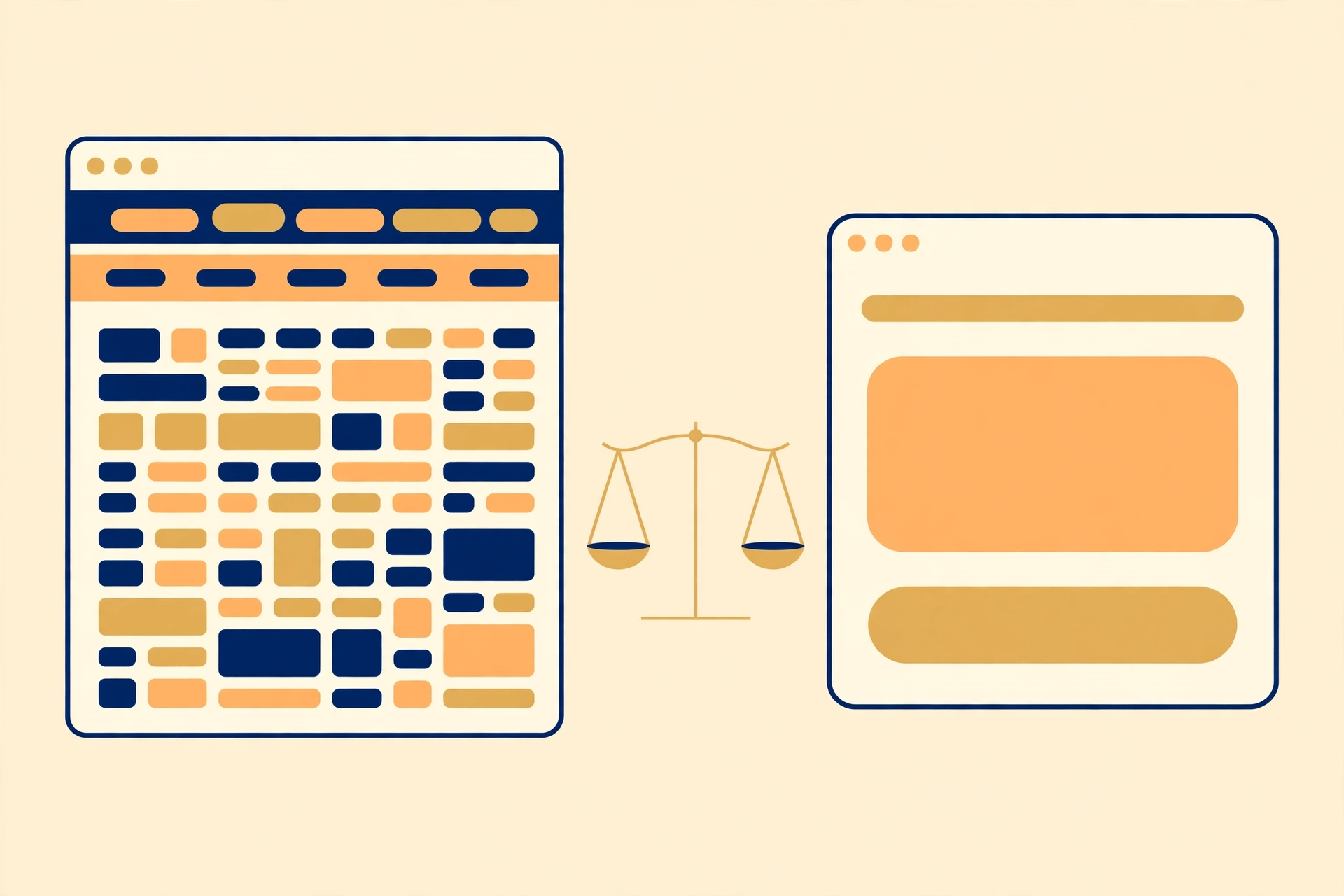
Quick answer: A website is a complete online presence — many pages (home, services, about, blog, contact) that present your whole business and build trust over time. A landing page is a single page built for one goal: getting a visitor from a specific campaign to take one action, like buying, booking or subscribing. A website is your house; a landing page is the salesperson standing in one room, talking about one offer. Most businesses need a website as their base, plus landing pages for their campaigns and key offers.
What Is a Landing Page?
A landing page is a standalone page designed around one offer and one action. Someone clicks an ad, a social post or an email link and «lands» on it. There is usually no menu and no way to wander off: the whole page — headline, benefits, proof, call to action — pushes toward a single decision. If you want the full definition and the elements it needs, my guide (in Spanish) qué es una landing page covers it in depth, and my collection of landing page examples shows what they look like in practice.
What Is a Website?
A website is the complete set of pages that represents your business online under one domain: homepage, services, about, blog, contact, and everything else you need. Visitors arrive from many places — Google, referrals, your social profiles — and move freely between pages, comparing, reading and deciding at their own pace. A website’s job is broader: to present everything you are, answer every reasonable question, and make you look like a real, trustworthy business.
Landing Page vs Website: The Key Differences
The table below sums up the comparison; the sections after it explain the differences that matter most when you are deciding.
| Aspect | Landing page | Website |
|---|---|---|
| Purpose | Convert visitors of one campaign into leads or sales | Present the whole business and build trust over time |
| Goal | One single action: buy, book, subscribe, download | Many goals: inform, sell, explain, contact |
| Number of pages | One standalone page | Many pages: home, services, about, blog, contact |
| Navigation | No menu — exits are removed on purpose | Full menu so visitors can explore freely |
| Traffic source | Ads, email, social campaigns, launches | Search engines, referrals, direct visits, social profiles |
| Lifespan | Often temporary: lives while the campaign runs (evergreen ones can last years) | Permanent — it is the business’s home |
| Content | Focused on one offer, nothing else | Complete: everything the business is and does |
| SEO role | Campaign pages are often noindex; an evergreen one can rank for one keyword | The SEO foundation: structure, blog and service pages rank over time |
| Best for | Ads, launches, lead magnets, testing one offer | Credibility, multiple services, organic growth |
One goal vs. many goals
This is the root difference. A landing page exists for one conversion: one product, one webinar, one lead magnet, one booking. A website exists for the whole business — it informs, sells several services, tells your story and supports, all at once. When a client tells me «my homepage doesn’t convert», the honest answer is usually that a homepage was never designed to convert like a landing page: it has too many doors.
Navigation: removed vs. essential
On a landing page, the menu disappears on purpose — every link that is not the call to action is an exit that loses the sale. On a website, navigation is essential infrastructure: the menu is how visitors find your services, your prices and your contact page. Same element, opposite treatment, because the jobs are opposite.
Traffic: campaigns vs. everywhere
Landing pages are fed by campaigns: ads, launches, email, social posts — traffic you send deliberately, with a message that matches the page word for word. Websites are fed by everything: search engines, word of mouth, your business card, your Instagram bio. That is why a website needs SEO structure and a blog, while a campaign landing page may not even be indexed — a distinction I explain in my guide to landing page SEO.

When Do You Need a Landing Page?
- You are running ads (Google, Facebook, Instagram) and need a page that matches the ad and converts the click.
- You are launching something: a product, a course, an event or a webinar with a start date.
- You offer a lead magnet — a free guide, checklist or discount in exchange for an email.
- You want to test an offer before building anything bigger around it.
- One service deserves its own stage, without competing with everything else you sell.
When Do You Need a Website?
- You need a credible home base: clients Google your name before hiring you, and a lone landing page looks like a pop-up, not a business.
- You offer several services and each one needs its own page, price logic and explanation.
- You want organic traffic: a blog and service pages are how Google finds you month after month.
- People need to explore before buying — your story, portfolio, reviews, FAQs and contact options.
Landing Page vs Homepage
A common extra confusion: the homepage is part of the website — it is the front door, designed to route each visitor to the right room. A landing page is more like a room with one chair and one conversation. Sending ad traffic to your homepage usually wastes money, because the visitor lands in a hallway full of doors instead of in front of your offer. That is the whole reason landing pages exist.
Can a Landing Page Replace a Website?
For most businesses, no — and I say this as someone who sells both. A landing page cannot carry your whole story, your blog, your services and your credibility; it was never meant to. There are narrow exceptions where one page is enough for a while: a single-product shop before launch, an author with one book, a professional testing one service. But notice what those exceptions really are: a one-page website doing landing-page duty. The moment the offer works, the business outgrows the single page and needs its home.
Do You Need Both? How They Work Together
In practice, the strongest setup is a website as the base and landing pages as the spears. The website builds trust and brings organic traffic through Google. The landing pages convert specific campaigns and offers without distractions. They live under the same domain, share the same design, and feed each other: my own site works exactly like this — service pages that rank on Google, and campaign pages kept out of search on purpose, each doing the job it was built for. If you are starting from zero, start with the website (even a small one), then add a landing page every time you launch a campaign or push a specific offer.
My Approach as a Designer
When a client asks me to choose, I ask one question first: where will this page’s visitors come from, and what single thing should they do? If the answer is «from my ad, and they should book», it is a landing page. If the answer is «from Google and referrals, and they should get to know my business», it is a website — or a new page within one. Getting that decision right at the start is what makes the design work later. If you need the second type built properly, my landing page design service creates pages designed to convert and, when the offer is evergreen, built to be found on Google too.
Frequently Asked Questions
Is a landing page the same as a website?
No. A landing page is a single page with one goal, usually fed by a campaign. A website is a complete set of pages that presents your whole business. A landing page can live inside your website’s domain, but it works by different rules: no navigation, one offer, one action.
Can I have a landing page without a website?
Yes, technically — tools let you publish a standalone landing page on its own. It can work for a first test or a launch. But without a website behind it, you lose credibility, organic traffic and a place to send people who are not ready to convert yet.
Which is better for SEO: a landing page or a website?
A website, by far. SEO needs structure, content and many pages working together. A single evergreen landing page can rank for one specific keyword if it is built for it, but it cannot replace the SEO foundation a full website provides.
Which one converts better?
For a specific campaign, the landing page — because it removes every distraction and speaks only about that offer. A website converts «the whole business» more slowly, through trust. They are not rivals: each converts at the stage it was designed for.
I already have a website. Do I still need landing pages?
If you run ads, launches or lead magnets, yes. Sending that traffic to a normal website page leaks conversions through the menu and the other options on the page. A dedicated landing page for each campaign is one of the cheapest conversion improvements a business can make.